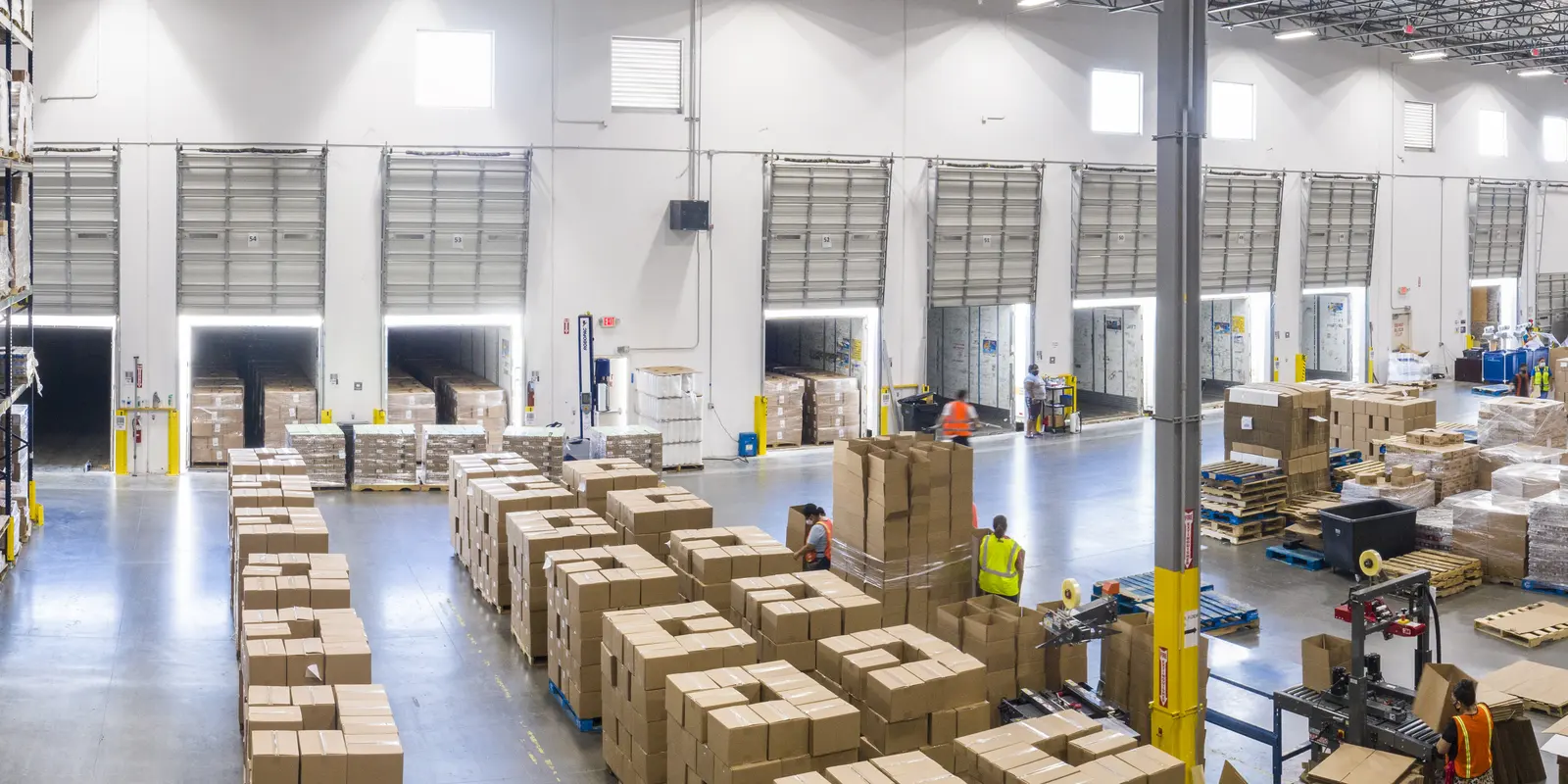
Most of what goes wrong with a home-care shipment goes wrong for one of three reasons: the goods were regulated and nobody said so, the carton was packed to survive a truck rather than a sorter, or the trailer sat in a Chicago yard overnight in January. All three are avoidable, and none of them are mysterious.
This note is written from the receiving side, which is the side that sees the failures. Every example here has happened to a shipment leaving or arriving at our dock.
Which cleaners are actually regulated
The great majority of what sits in a home-care aisle is unregulated for ground transport — water-based sprays, detergent sheets, dish liquid, most concentrates. What gets caught are three narrower groups:
- Aerosols. Anything pressurized ships as a limited quantity consumer commodity. Ground is fine; air is generally not, and a carrier will strip an aerosol out of an air shipment without warning you first.
- Alcohol-based products. Hand sanitizer and some glass cleaners cross the flash-point threshold that makes them a flammable liquid. Below the limited-quantity thresholds they move by ground with a marking rather than full hazmat paperwork.
- Concentrated acids and bases. Rust removers, some drain products and a handful of heavy-duty degreasers. These are the only ones in a normal home-care assortment that can require genuine hazmat handling.
The practical consequence for a buyer is small but real: if your order includes any of these, do not expect it to move on an expedited air service, and do not assume a residential delivery is available. Ask before promising a customer a date.
What "limited quantity" means on your paperwork
It is a relief provision, not a warning. Small consumer packages of certain regulated products can move with a diamond marking on the carton instead of the full hazardous-materials regime. You will see the marking on the box and a line on the bill of lading; there is nothing for you to do at receiving except not refuse the freight because a diamond looks alarming.
Leaks: it is almost never the bottle
When a case of trigger sprays arrives wet, the failure is usually one of four things, in descending order of frequency.
The trigger was left unlocked. A sorter belt compresses cartons; an unlocked trigger under 40 lb of stacked weight will discharge. Good manufacturers ship with the trigger locked and a shrink band; the ones that do not are the ones that generate claims.
The cap backed off in a temperature swing. A carton loaded at 95°F in Georgia and delivered at 40°F in Ohio contracts. Headspace shrinks, the closure loosens a fraction of a turn, and a bottle lying on its side weeps. This is why liquids should be packed upright and why cartons are marked as such.
The master carton was under-filled. Voids let contents shift, and shifting contents hit each other and the box wall. A case with 20% void space is dramatically more likely to arrive damaged than the same goods packed tight.
The gallon was the problem. One-gallon HDPE jugs are the single highest-risk format in this category, because the weight-to-closure ratio is bad and the handle concentrates stress. We double-bag gallon concentrates inside the master carton for exactly this reason. It costs a few cents a case and eliminates most of the claims we would otherwise write.
Winter freeze
Water-based cleaners freeze at close to 0°C, and freezing does more than inconvenience the customer — some surfactant systems separate irreversibly and never re-emulsify. The product looks curdled after thawing and is unsellable.
The risk window is not the delivery, it is the dwell. A trailer moving is a trailer that is roughly ambient; a trailer parked in a yard in Minneapolis for fourteen hours is a freezer. That is why freeze damage concentrates on routes with a terminal transfer rather than on the longest routes.
What we do about it: between December and February, water-based liquids going north of the Ohio River ship with a freeze indicator in the carton — a small irreversible strip that records whether the contents dropped below the threshold. It does not prevent anything. It settles the argument about whether it happened, which is the part that otherwise costs everyone a week.
What you can do on the receiving end
Three things, all cheap:
- In the winter months, order in slightly larger, less frequent quantities. Fewer shipments means fewer chances to sit in a yard.
- Do not schedule a liquid delivery for a Friday if your dock is closed over the weekend. A pallet in an unheated receiving area for 48 hours is the same exposure as a bad transit.
- Bring freight inside before opening it. A carton at 20°F that is opened in a warm room condenses, and wet corrugate collapses under stack weight.
Signing for the delivery
This is the part that costs stores real money, and it takes thirty seconds. Count the pallets or cartons against the delivery receipt, and look at the outside of the freight before you sign. If a carton is crushed, stained or the shrink wrap is torn, write it on the receipt — "2 cartons water stained", not "possible damage".
A clean signature on damaged freight makes a carrier claim extremely difficult to win, for the store and for the distributor. Almost every claim we have lost was lost at the signature, not at the inspection.
Our own window is 10 days from delivery to report damage, shortage or an incorrect item, with photographs of the carton and the pallet label. The pallet label matters because it carries the lot and the receiving date, which is what lets us trace the case back to the purchase invoice.
The short version
Home care is heavy, wet and cheap per unit, which means the freight decisions matter more than they do in most categories. Ask whether anything in your order is regulated before you promise a date. Expect gallons to be the format that fails. Order less often in January. And write on the delivery receipt.
Key takeaways
- Only aerosols, alcohol-based products and concentrated acids or bases are typically regulated in a home-care assortment — but those cannot move by air.
- Limited quantity is a relief provision, not a hazard warning. There is nothing extra to do at receiving.
- Most leaks come from unlocked triggers, temperature-driven closure loosening, void space in the master carton, or gallon jugs.
- Freeze damage happens during yard dwell, not transit. Freeze indicators settle the argument; they do not prevent the damage.
- Note visible damage on the delivery receipt before signing. A clean signature is where most carrier claims are lost.